
What Affects the Price of Bulk Pink Salt? 7 Factors Buyers Should Understand
Ask three suppliers for the price of bulk Himalayan pink salt and you may receive three numbers that barely resemble each other. That spread is confusing, and it is tempting to assume the cheapest quote is simply the most honest one. Usually, it is not that simple. “Pink salt” is not a single, standardised product with a single market price. It is a family of grades, sold in different quantities, packed in different ways, and shipped to different destinations under different terms. Change any one of those variables and the price changes with it — legitimately.
Comparing quotations without understanding what sits behind them leads to bad decisions: salt in the wrong grain, packaging that fails in transit, or a “saving” that disappears when the real costs appear later. Below are the seven factors that genuinely move the price of bulk pink salt, so you can read any quotation with clear eyes.
1. Grade and grain
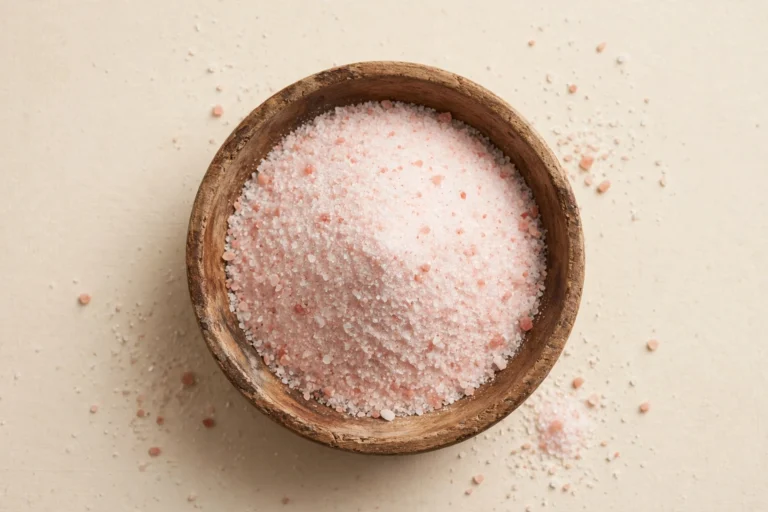
The first driver is the product itself. Himalayan pink salt is supplied in different grades defined largely by grain size: fine and extra fine grades for table use, blends and manufacturing; coarse grades and crystals for grinders and finishing; powder for instant, even mixing; and granules as a free-flowing middle option.
These grades are priced differently because producing them is not the same job. Finer grades require more milling and sieving to reach a consistent, even grain, and consistency is what manufacturers are actually paying for — a fine grade that contains coarse lumps is not a fine grade, whatever the invoice calls it. Larger crystal pieces follow a different handling path again. Colour sorting, cleaning and the yield a processor gets from raw material also vary by grade, and those costs land in the final figure.
The practical point: two quotes are only comparable when they describe the same grade, in the same words, ideally with the grain confirmed in the quotation itself. If one quote says “fine” and means something noticeably coarser, you are not looking at a better price — you are looking at a different product.
2. Quantity
Bulk pricing is volume pricing, and the per-kilo figure you are quoted will almost always improve as the order grows. The reasons are mechanical: grading, packing and documenting an order involves fixed work that is spread across every kilo in it, and a full load uses freight capacity far more efficiently than a small consignment.
Quantity also interacts with grade and packaging. A large order of one grade in one format is the most efficient thing a supplier can produce; split the same weight across several grades and pack sizes and the price per kilo rises, because each variant is effectively its own smaller order. When you see a surprisingly low bulk price, ask what quantity it assumes — a figure quoted for a full container does not apply to a trial pallet.

3. Packaging format and protection
Salt is heavy, and it is hygroscopic — it absorbs moisture from the air. Packaging is therefore not a cosmetic detail; it is part of the product’s cost and part of whether the product arrives usable.
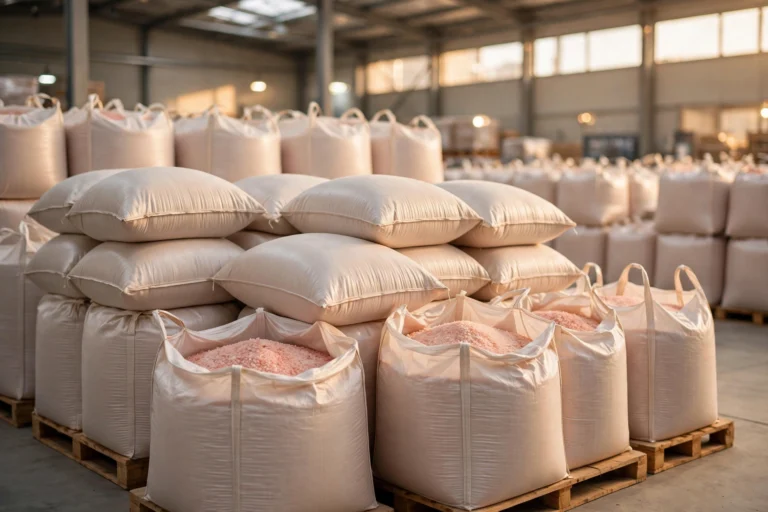
A bulk order packed in simple trade bags costs less than the same salt packed into retail-ready pouches, grinder bottles or branded formats, because those formats add materials, filling time and finishing work. Protection adds cost too, and for good reason: packaging that is adequate for a short domestic journey can fail on a long international route, letting in moisture that cakes the salt and, in the worst case, ruins it. Liners, moisture barriers, palletising and wrapping all exist to prevent that, and all of them are real costs a serious quotation will include rather than hide.
When comparing quotes, check whether packaging is specified at all, and whether it matches your route. A quote that is silent on packaging is not cheaper — it is incomplete.
4. Destination and delivery terms
Where the salt is going changes what it costs to get it there. Distance, transport infrastructure, port and clearance charges, and handling at each end all feed into a delivered price — which is why a supplier who does not know your destination cannot give you a meaningful final figure.
Delivery terms decide who carries which part of that cost and risk. Depending on the terms agreed, a price might cover only the goods, the goods plus carriage to a named point, or a fuller delivered scope — and two quotes using different terms will look dramatically different while describing the same salt. Before comparing numbers, line up the terms. If a quotation does not state what its price includes, ask, in writing, before you treat the number as real.
5. Document requirements of the destination market
Every destination market has its own import requirements, and meeting them is work. Commercial invoices and packing lists are routine, but depending on the market and the product’s intended use, buyers may also need certificates of origin, health or food-related documentation, or specific labelling. Preparing correct documents takes time and sometimes third-party cost, and errors are expensive: a document problem discovered on arrival can mean delays, storage charges or a rejected consignment.
A quotation that has accounted for your market’s document requirements is worth more than one that never asked where the salt is going. Tell your supplier the destination and intended use at the enquiry stage, so this cost is included honestly rather than argued about later.
6. Order timing and market conditions
Bulk pink salt is a physical commodity moving through real supply chains, so its price is not frozen. Transport and fuel costs move. Exchange rates move, which matters when a product is produced in one country and sold into another. Seasonal demand — from food manufacturers, retailers preparing for peak periods, or buyers stocking ahead — can tighten availability of particular grades, and a rush order costs more than a planned one.
Quotations have validity periods for a reason. If you are comparing a quote from this month with one from last quarter, part of the difference may simply be the market having moved — so ask for a current, written quotation on your exact requirement rather than treating old numbers as promises.
7. The supplier’s process
The last factor is the least visible and, in our experience, the one that decides whether a cheap price stays cheap: how the supplier works.
A supplier whose process starts with your specification — grade, grain, intended use, packaging, destination — and confirms it in writing before quoting is doing work that a vague offer skips. That work has a cost, and it is worth paying: the alternative is discovering a mismatch after payment — the wrong grain for your grinder packs, packaging unsuited to your route, documents your market will not accept — each far more expensive to fix than the small difference between two quotations.
As we set out in our guide on how to choose a bulk pink salt supplier, experienced buyers verify the specification, the packaging and the paperwork before they celebrate the number.

How to compare two quotations fairly
Given everything above, a fair comparison is a checklist, not a glance at the bottom line:
- Same grade, same grain. Is the product described identically in both quotes, with the specification confirmed in writing?
- Same quantity. Do both prices assume the same total weight and the same split across grades and pack sizes?
- Same packaging. Is the format and the level of protection equivalent, and suited to your route?
- Same destination and terms. Does each price include the same scope of delivery, and is that scope stated?
- Same documents. Has each supplier accounted for your market’s document requirements?
- Same validity. Are both quotations current, and until when does each hold?
If any line differs, the prices are not yet comparable — align the requirement first, then compare. Whether you are buying on a wholesale basis or as a bulk supply arrangement, this discipline is what turns a pile of numbers into a decision.
Why Teranexa Trader does not publish a price list
You will not find a price list on this website, and that is deliberate. As the seven factors above show, a published price for “pink salt” would have to assume a grade, a quantity, a packaging format, a destination and a set of terms — and if those assumptions are not yours, the number would mislead you. We would rather give one accurate figure than a page of approximate ones.
So this is how we work instead: you send us the product, quantity, packaging and destination; we check the grade against your intended use; and we confirm the price, packaging and terms in a written quotation for your exact order. No generic lists, no vague offers, and no figure that quietly assumes something different from what you asked for. That written confirmation is the protection that the salt, the packing and the price you approved are the ones that ship.
Still Looking for the Right Supplier? You Can Stop Here.
If you have been comparing suppliers and nobody has given you straight answers, that is exactly the gap Teranexa Trader fills. Tell us what you need — the grade, the quantity, the packaging and the destination — and we supply to your demand: your specification is confirmed in writing first, and then you receive a quotation for your exact order. No generic price lists, no vague promises, and no anonymous sales desk.
- Supply matched to your specification — grade, grain, packaging and destination
- Written quotation before anything is packed or shipped
- Six edible Himalayan pink salt grades from one supplier in Pakistan
- Named management you deal with directly — Muhammad Aslam (CEO) and Ahmad Sufyan Warsi (CMO)
FAQs
Why did two suppliers quote very different prices for the same salt?
Usually because the quotations are not actually for the same thing. Differences in grade definition, quantity assumed, packaging, delivery terms, document scope and currency of the quote can each move the figure. Ask both suppliers to quote in writing against an identical specification, then compare line by line.
Is the cheapest bulk pink salt quote the best value?
Not necessarily. A low figure that assumes a coarser grain, weaker packaging or a narrower delivery scope can cost more in the end — in rejected product or surprise charges. Value is the total cost of salt that arrives correct and properly documented.
Why won’t suppliers just publish one price per tonne?
Because that price depends on grade, volume, packaging, destination and terms, all of which vary by order. A single published number would be wrong for most buyers. Serious suppliers quote per order, in writing, once they know your requirement.
How can I get an accurate price for my order?
Send the details that determine the price: the grade, the quantity, the packaging format, the destination and what the salt will be used for. The more complete the enquiry, the more accurate the first quotation. You can do that through our request a quote page.
Get a price for your exact order
If you are weighing up suppliers, get a figure you can rely on: a written quotation against your own specification. Tell us the grade, quantity, packaging and destination, and we will confirm the specification first, then quote your exact order. The same applies to fresh mangoes in season: send the variety, quantity, packaging and destination, and we will quote that order the same way.