
How to Import Pink Salt from Pakistan: A Step-by-Step Guide for Business Buyers
Importing Himalayan pink salt from Pakistan is not complicated, but it does reward buyers who do things in the right order. Almost every problem first-time importers describe — the wrong grain arriving, packaging failing on a long route, paperwork holding a shipment at the port — traces back to a step that was skipped or left vague at the start.
This guide walks through the process in the order experienced buyers use it: decide what you actually need, qualify the supplier properly, agree everything in writing, understand the documents, know who is responsible for what during shipping, and check the shipment properly when it arrives. None of it requires specialist knowledge. It requires being specific, early.
Step 1: Decide your exact specification
Before you contact any supplier, write down five things:
- Grade. Which of the edible grades do you need — fine, extra fine, coarse, crystals, powder or granules? The grade follows from the end product: table packs, grinder refills, seasoning blends and food processing all call for different grains. If you are unsure how the grades differ, work through our guide to Himalayan pink salt grades before you enquire.
- Grain. Within a grade, describe the grain you expect as precisely as you can — “fine” means different things to different suppliers unless it is pinned down.
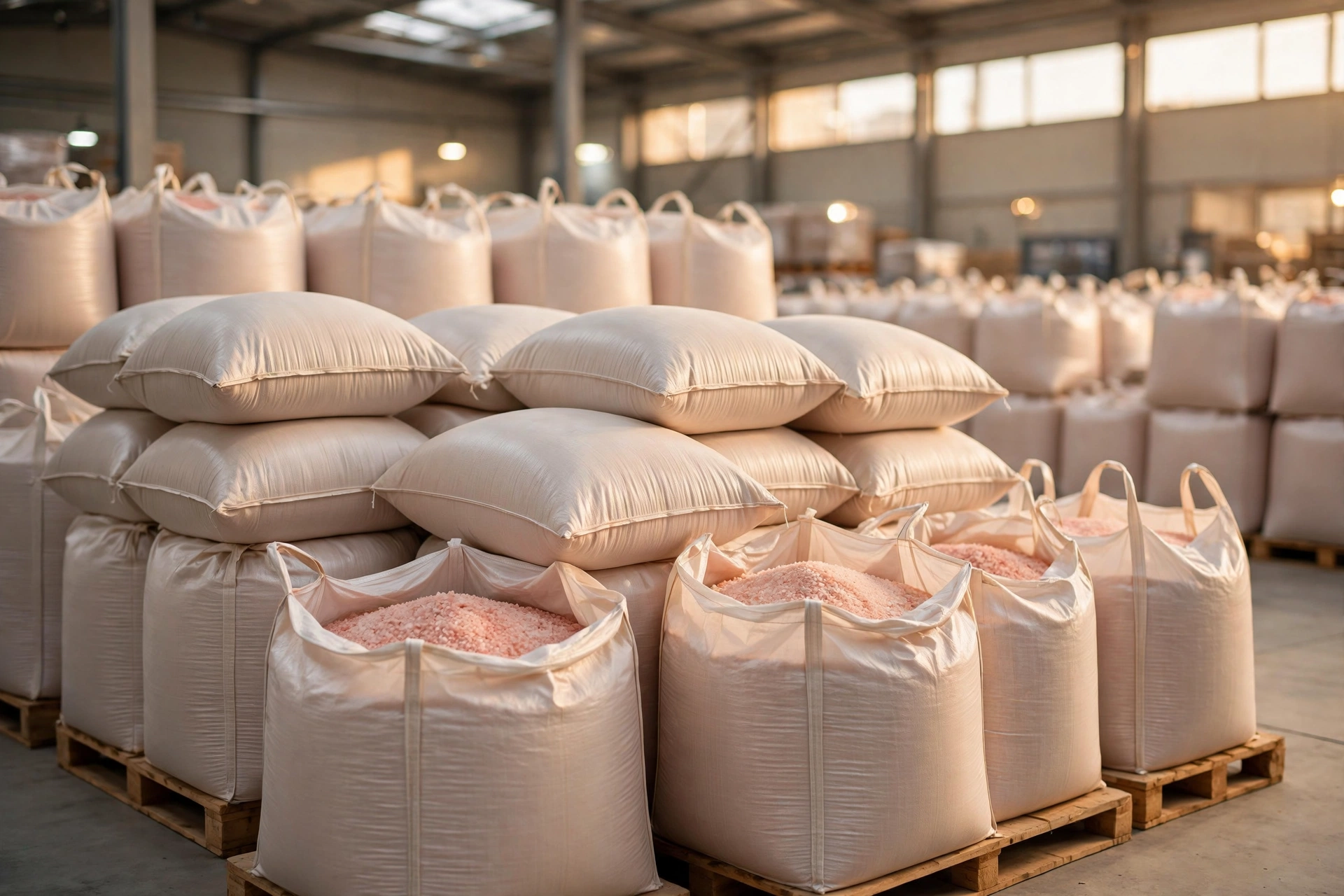
- Packaging. How must the salt be packed to survive the journey and suit your own handling, storage and resale?
- Quantity. A realistic quantity for this order, not a guess at next year’s volume.
- Destination. The country and, if you know it, the port or city the goods are going to.
This one page of detail changes the quality of every answer you receive. A supplier can only quote accurately against a defined requirement — and a supplier who quotes a firm price without asking for these five things is telling you something about how they work.
Step 2: Find and qualify a Pakistan-based supplier
Pakistan is the source country for Himalayan pink salt, so buying from a Pakistan-based supplier means buying closer to the origin, with fewer intermediaries in the chain. The qualification checks are simple, and they are the same ones you would apply to any supplier in any country:
- A named business. Real people, with names and roles, that you can speak to directly. At Teranexa Trader, enquiries are handled by our management — Muhammad Aslam (CEO & Founder) and Ahmad Sufyan Warsi (CMO & Senior Manager) — not an anonymous sales desk.
- A real address. A business that publishes where it is based, and whose address stays consistent across its website, documents and correspondence.
- Written confirmations. Everything that matters — specification, price, packaging, terms — confirmed in writing, not only discussed on a call.
- Straight answers about limits. A supplier who tells you honestly what they cannot do is worth more than one who agrees to everything. If a requirement falls outside what a supplier can genuinely supply, you want to hear it before you pay, not after.
- Willingness to work to your specification. The conversation should start from your requirement, not from a generic price list.
Shortlist two or three suppliers, send each of them the same specification from Step 1, and compare how they respond. The quality of the questions they ask is often as revealing as the price they quote.

Step 3: Agree the specification and quotation in writing
Once you have chosen a supplier, the next step is a written quotation for your exact order. A useful quotation states the product and grade, the specification agreed, the quantity, the packaging, the destination and the commercial terms — so that both sides are working from the same document.
Read it the way you would read any contract: if something you discussed is missing, ask for it to be added. If a term is ambiguous, ask what it means in practice. Verbal assurances are hard to rely on once money has moved and goods are on the water; the written quotation is what protects both parties.
This is also the moment to agree how you will communicate during the order — who your contact is, how packing and dispatch will be confirmed, and what happens if anything changes. None of this needs to be complicated. It needs to be written down.
Step 4: Understand the documents an export shipment typically involves
International shipments move on paperwork as much as on trucks and vessels. The exact document set depends on your destination country’s requirements, but an export shipment of food-grade salt from Pakistan typically involves some or all of the following:
- Commercial invoice — the seller’s statement of what is being sold, in what quantity, at what value.
- Packing list — how the goods are packed: number of units, weights and how they are made up.
- Bill of lading — the transport document issued by the carrier, which evidences the shipment and is usually needed to claim the goods at destination.
- Certificate of origin — a document certifying the country the goods originate from, which some markets require for customs clearance or duty treatment.
Why do requirements differ? Because each destination country sets its own import rules for food products — labelling rules, document formats, and in some markets additional certificates or registrations. The supplier is responsible for the export-side documents they have agreed to provide; what your market demands on the import side is something you should confirm with your own customs broker or freight forwarder before the order is placed, not while the container is on the water.
A practical habit: ask, early, “which documents will you provide with this shipment?” and compare the answer with your broker’s requirements list. Gaps are easy to close at this stage and expensive to close later.
Step 5: Shipping and roles — who does what
Three roles handle most import shipments, and confusion usually comes from assuming one of them is doing another’s job:
- The supplier prepares the goods: the agreed grade, packed as agreed, with the agreed export documents, ready at the agreed point.
- The freight forwarder organises the transport — booking space, moving the goods, and handling the logistics between origin and destination.
- The customs broker (usually at destination) handles your import declaration and clearance with your local customs authority, and advises on duties and taxes in your market.
Which of these you arrange yourself, and which the supplier arranges, depends on the terms agreed in your quotation. There is no single right answer — but there must be an answer, in writing, before the goods move. If you are new to importing, a good freight forwarder is worth finding early; they will also tell you what they need from your supplier, which feeds neatly back into Step 4.
Our Export & Shipping page explains how export orders are handled from our side, and what information we need from you to quote and arrange an order properly.
Step 6: Arrival, clearance and checking your shipment
When the shipment arrives, it clears customs through your broker, who will need the shipment documents — one more reason the paperwork in Step 4 matters. Once the goods reach you, check them before you do anything else:
- Documents against goods. Do the invoice and packing list match what has physically arrived — product, quantity, packaging?
- Packaging condition. Has anything arrived damaged, wet or torn? Salt is hygroscopic — it absorbs moisture — so packaging condition is not cosmetic; it affects the product.
- Product against specification. Open units from different parts of the load, not just the first one. Is the grade and grain what was confirmed in your written quotation?
If something does not match, document it immediately — photographs, notes, quantities — and contact your supplier while the evidence is fresh. A supplier who confirmed everything in writing at the start will treat a documented discrepancy as a problem to solve, because the agreed specification gives both sides the same reference point. That, in the end, is why the earlier steps exist.

Mistakes first-time importers make
- Ordering by price before specification. A low price for the wrong grain is not a saving; it is an expensive mistake with freight on top.
- Assuming “fine” and “coarse” mean the same thing everywhere. They are descriptions, not measurements. Pin the grain down in the written agreement.
- Choosing packaging for the warehouse, not the journey. Packaging that works for a short domestic run can fail on a long sea route or in humid storage. Agree packaging against the actual route.
- Leaving documents until the goods are ready. Destination requirements discovered late delay clearance and add cost. Ask in week one.
- Not knowing who arranges what. Supplier, forwarder and broker roles left unassigned are where shipments quietly stall.
- Skipping the arrival check. Problems reported weeks later, without evidence, are far harder to resolve than problems documented on the day.
Still Looking for the Right Supplier? You Can Stop Here.
If you have been comparing suppliers and nobody has given you straight answers, that is exactly the gap Teranexa Trader fills. Tell us what you need — the grade, the quantity, the packaging and the destination — and we supply to your demand: your specification is confirmed in writing first, and then you receive a quotation for your exact order. No generic price lists, no vague promises, and no anonymous sales desk.
- Supply matched to your specification — grade, grain, packaging and destination
- Written quotation before anything is packed or shipped
- Six edible Himalayan pink salt grades from one supplier in Pakistan
- Named management you deal with directly — Muhammad Aslam (CEO) and Ahmad Sufyan Warsi (CMO)
FAQs
How do I start importing pink salt from Pakistan?
Begin with your specification — grade, grain, packaging, quantity and destination — then send it to a shortlist of Pakistan-based suppliers and compare their written quotations on identical terms. The steps above follow that order deliberately.
What documents will I need?
Typically a commercial invoice, packing list and bill of lading, and in many markets a certificate of origin. Your destination may require more. Confirm the full list with your customs broker before ordering, and confirm with your supplier which documents they will provide.
Can I get a sample before placing an order?
Sample policies vary between suppliers. Ask with your first enquiry, and have the sample terms — quantity, cost and courier arrangements — confirmed in writing before anything is sent.
Do I need a freight forwarder?
Most first-time importers benefit from one. A forwarder organises transport and will tell you exactly what they need from you and your supplier. Whether you appoint one, and which parts of the journey they handle, depends on the terms agreed in your quotation.
The People Behind Your Order
Importing from a new country is easier when you know exactly who you are dealing with. At Teranexa Trader there is no anonymous sales desk — your enquiry, your specification and your order are handled by named management:

Leads export orders and quotations. You can reach him directly on WhatsApp: +92 302 7851897.

Handles buyer communication and order coordination, from first enquiry to confirmed specification.
Ready to import from Pakistan?
If you are comparing exporters, our Pink Salt Exporter from Pakistan page sets out how we work, which grades we export and how packaging and shipment are arranged. When you are ready, send us your grade — or, in season, the mango variety —, quantity, packaging and destination through our request a quote page — or write to contact@teranexatrader.com — and we will confirm the specification in writing and quote your exact order. No generic price lists, and no claims we cannot stand behind: that is how every order at Teranexa Trader begins.