
How to Request a Pink Salt Quote That Gets an Accurate Reply
The good news: an accurate first reply is largely within your control. Six details turn a vague enquiry into one a supplier can price properly, immediately.
The 6 details every accurate quote needs
1. The product and grade
Himalayan pink salt is not one product. It is supplied in grades defined mainly by grain: fine and extra fine for table use, seasoning blends and manufacturing; coarse and crystals for grinders, mills and finishing; powder where instant, even mixing matters; and granules as a free-flowing middle grain.
The grade changes the price because the production work behind each grade differs — milling, sieving, sorting and handling are not identical jobs — and it changes suitability completely. Coarse crystals in a fine seasoning blend, or powder in a grinder pack, is a failed order however good the price was. Name the grade you need; if you are unsure which grade fits your product, say so and describe the use instead (see detail five) — a good supplier will recommend the grade rather than sell you the wrong one. You can compare the full range on our products page before you write.
2. The quantity
State the total quantity you want priced, and how it splits if there is more than one grade or pack size. Quantity is not a formality: bulk prices are volume prices, because an order’s fixed work — grading, packing setup, documentation — is spread across every kilo, and freight is far more efficient on a full load than on a small consignment. A container-load price will not be a trial-quantity price, and neither figure tells you anything about the other.
If you are testing a new supplier, ask for pricing on your trial quantity and your expected ongoing quantity — just label which is which, so the quotation answers the question you actually asked.
3. The packaging
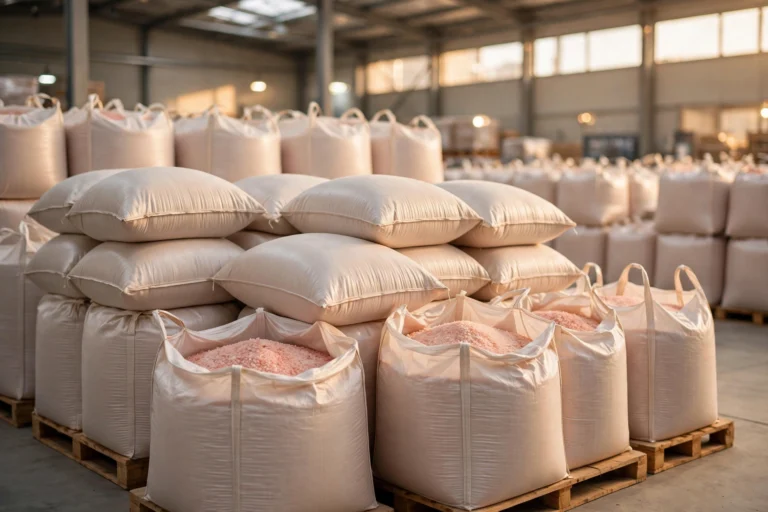
Say how you want the salt packed: bulk trade bags, retail-ready pouches, your own specified format, or “advise me”. Packaging carries real cost — materials, filling and finishing — and for salt it also carries risk: salt absorbs moisture, so packaging that suits a short route can fail on a long one, and caked or ruined salt is the most expensive salt of all.
If you have a packaging specification from your own market, include it. If not, say what the salt will be sold or used as, and let the supplier propose the format in the quotation, written down for you to approve.
4. The destination
A supplier cannot price delivery without knowing where the salt is going, and destination means more than geography. Your market’s import and document requirements, its labelling rules and the handling at its ports all shape what an order involves. A quote produced without a destination is, at best, a price for the goods alone under unstated assumptions.
Give the destination country and, if you know it, the city or port, and say whether you want a price for the goods only or a price that includes delivery to that destination. If you are comparing suppliers across countries, giving each one the same destination and the same delivery scope is what makes their numbers honestly comparable.
5. The intended use
Tell the supplier what the salt is for: retail table packs, a seasoning blend, food manufacturing, grinder refills, a private-label range. Intended use is the detail that lets a supplier protect you — it is how the grade gets checked against reality: whether the grain will behave in your product, whether the packaging suits how the salt will be sold, and whether your market’s requirements have been met.
Buyers sometimes hold this back, as if sharing it weakens their position. In practice it does the opposite: a supplier who knows the use can confirm the specification in writing before anything is packed, which is exactly the protection you want.
6. Your timeline
Say when you need the salt, or when you are aiming to decide. Timeline affects what is possible and occasionally what it costs — a planned order follows the most efficient schedule, while a rush order may need to jump queues and pay for it. It also sets honest expectations: the supplier can confirm whether your date is achievable before quoting. If your timing is flexible, say that too; flexibility is useful information, not a weakness.

A weak enquiry vs a strong enquiry
The difference is easier to see than to describe. Here is the kind of message that cannot be priced accurately:
“Hello, please send your price for pink salt, best quality, urgent.”
Nothing in it is answerable: no grade, no quantity, no packaging, no destination. Any number sent back would be a guess, and the real reply has to be a round of questions.
Now the same buyer, one minute later, with the details included:
“Hello, we are a food distributor importing into our market. Please quote: coarse Himalayan pink salt for grinder refill packs, an initial trial order followed by regular monthly quantities if quality is right; packed in bulk bags suitable for a long sea route, to be repacked by us; destination country and port as follows. If you offer alternative packaging for grinder brands, please mention it. We are aiming to confirm an order this month.”
The second message can be quoted properly the first time — and, just as importantly, the supplier’s reply can be checked against it line by line. If you are still deciding which supplier deserves that enquiry, our guide to choosing a bulk pink salt supplier sets out the checks to run on whoever replies.

What happens after you send it
At Teranexa Trader, an enquiry is handled in a fixed order. First, we check the specification: the grade against your intended use, the packaging against your route, and your destination’s requirements against what the order will need. If something would not work — the wrong grain for the stated use, for example — we raise it at this stage, not after packing.
Then we confirm everything in a written quotation for your exact order: product and grade, quantity, packaging, and the price and terms that apply to it. That document is the agreement you can hold us to. It is also why we do not publish a price list: as our FAQs explain, prices and any minimums depend on the grade, quantity, packaging and destination, so a generic figure would mislead you. Your enquiry goes to named management — Muhammad Aslam (CEO) and Ahmad Sufyan Warsi (CMO) — and you deal with them directly.
Common omissions that slow replies
A few gaps account for most delayed quotations:
- No destination. The single most common omission. Without it, delivery and document scope cannot be priced at all.
- “Best quality” instead of a grade. Quality language is not a specification. Name the grade or describe the use, so the right product is quoted.
- Quantity left vague. “Bulk” is not a quantity. Even an approximate figure with a note that it may change lets the supplier price the right scale.
- Packaging assumed. If the quote comes back in a format you did not expect, the comparison you were making falls apart. State the format, or ask for a recommendation explicitly.
- Market requirements mentioned late. If your market needs specific documents or labelling, raising it after the order is placed is how delays and extra costs happen. Put it in the first message.
- No name or business behind the enquiry. Suppliers prioritise enquiries they can answer properly. A business name, a country and a real requirement signal a real order.
None of these take long to fix — most enquiries can be made complete in under five minutes, and the time is repaid in a first reply you can actually use.
Still Looking for the Right Supplier? You Can Stop Here.
If you have been comparing suppliers and nobody has given you straight answers, that is exactly the gap Teranexa Trader fills. Tell us what you need — the grade, the quantity, the packaging and the destination — and we supply to your demand: your specification is confirmed in writing first, and then you receive a quotation for your exact order. No generic price lists, no vague promises, and no anonymous sales desk.
- Supply matched to your specification — grade, grain, packaging and destination
- Written quotation before anything is packed or shipped
- Six edible Himalayan pink salt grades from one supplier in Pakistan
- Named management you deal with directly — Muhammad Aslam (CEO) and Ahmad Sufyan Warsi (CMO)
FAQs
What is the minimum information a supplier needs to quote?
At minimum: the grade, the quantity, the packaging format and the destination. Add the intended use and your timeline and the quotation can be both accurate and checked against your real requirement, rather than priced on assumptions.
Can I get a quote if I do not know which grade I need?
Yes. Describe what the salt will be used for — the product it goes into, how it will be packed and sold — and ask the supplier to recommend a grade. A good supplier would rather advise you than sell you a grain that does not suit your product.
Why do suppliers ask so many questions instead of sending a price?
Because the price genuinely depends on the answers. Grade, quantity, packaging, destination and terms each change the figure, so questions now are how a supplier avoids quoting a number that later has to change.
How should I send my enquiry to Teranexa Trader?
Include the six details above — product and grade, quantity, packaging, destination, intended use and timeline — and send them through our quote form, by email to contact@teranexatrader.com, or by WhatsApp. We check the specification first, then reply with a written quotation for your exact order.
Send an enquiry that gets an accurate reply
You now have the checklist. Put it to work: gather the six details and request your quote — we will confirm the specification in writing and quote your exact order, with named management handling your enquiry from the first reply. The same six details apply to fresh mangoes in season — variety instead of grade — and the quote form has a mixed order option for salt and mangoes together.