
Bulk Pink Salt Buying Guide for Importers and Wholesalers
Buying Himalayan pink salt in bulk looks simple from a distance: one product, a price per kilo, a shipment. Up close, it is a series of decisions — grade, grain, packaging, quantity, supplier — and the quality of those decisions decides whether the salt that arrives is an asset or a problem sitting in your warehouse.
This guide is written for importers and wholesalers who buy in commercial quantities. It covers the decisions in the order you will actually face them: choosing the grade and grain, planning quantity, specifying packaging that survives the journey, getting quotations you can genuinely compare, and thinking about total cost rather than the headline price.
Start with the grade and grain decision
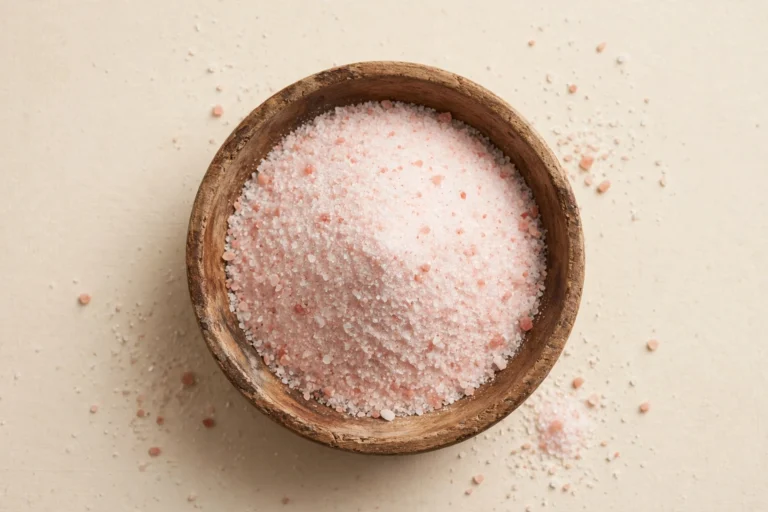
Everything else in a bulk order hangs off this one. The six edible grades of Himalayan pink salt differ mainly in grain size, and grain size decides what the salt is good for:
- Fine — the general-purpose grade for retail table packs, seasoning blends, food processing and professional kitchens.
- Extra fine — the finest grade, for fine blends, snacks, baking mixes and any product where no visible grain is wanted.
- Coarse — visible crystals, behind grinder and mill refill packs and finishing salt.
- Crystals — larger pieces, bought by businesses that mill, grade or pack to their own specification, and by specialty brands.
- Powder — powder-fine, for processed foods, ready mixes and coatings where distribution must be instant and uniform.
- Granules — a free-flowing grade between fine and coarse, easy to handle in processing and popular in retail packs.
Two rules save most buyers from the most common mistake. First, choose from the end product backwards: what will your customer do with this salt, and should the grain be visible in the finished product? Second, treat grade names as descriptions, not measurements. “Fine” from one supplier is not automatically identical to “fine” from another. Describe the grain you expect, ask the supplier to confirm the specification for your order in writing, and hold that document as the reference for everything that follows. Our grades explained guide walks through each grade and its typical uses in more detail.
If you sell into several segments — retail packs and food manufacturers, say — be honest about whether one grade genuinely serves both, or whether you are forcing a compromise that will show up in complaints later. Two grades ordered deliberately usually outperform one grade stretched across jobs it does not suit.
Quantity planning: how order size changes the conversation
You do not need published figures to plan quantity well — you need to understand what your order size changes. A larger order typically changes three conversations:
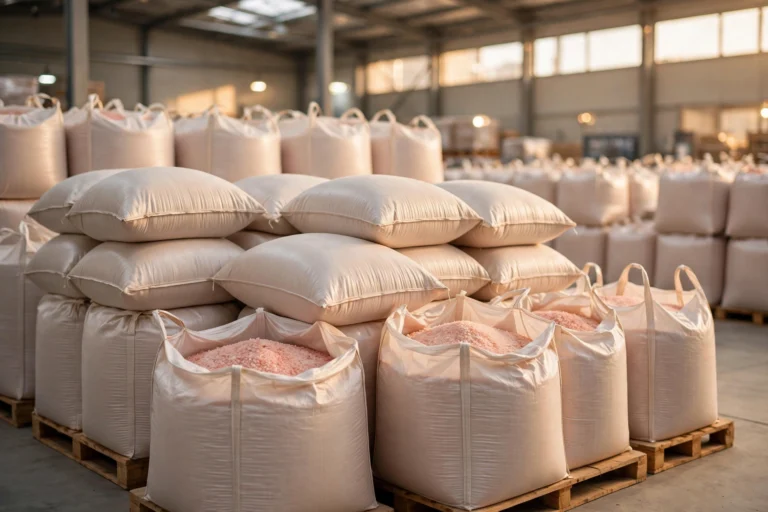
- Packaging. Bigger consignments make bulk-oriented packing formats more practical, while smaller orders often suit formats closer to your end use. The right answer is the one matched to how you will store, handle and sell the product — ask for the options at your quantity, not in the abstract.
- Transport. Order size influences how a shipment is most sensibly moved and consolidated. Your freight forwarder will have a view on this; involve them early rather than after the order is confirmed.
- Continuity. Wholesalers live on repeat supply. A sensible first order proves the specification, the packaging and the supplier; later orders then repeat a known-good pattern instead of renegotiating from zero each time.
What to avoid: ordering a very large quantity on a first order with a new supplier to chase a marginally better price. The specification risk sits with you. Experienced buyers prove the product and the relationship first, then scale with confidence.

Packaging for transit and storage
Salt has two physical traits that should shape every packaging decision: it is heavy, and it is hygroscopic — it absorbs moisture from the air. Packaging that ignores either will fail somewhere between the supplier’s store and your customer’s shelf.
Think about the whole journey, in order:
- The route. How far, by what means, and through what climate? A long sea journey and humid transhipment points punish weak moisture protection far more than a short regional run.
- Handling. How many times will the goods be loaded, stacked and moved? Every handling stage tests seams, stitching and stacking strength.
- Your storage. How long will the salt sit with you, and in what conditions? Packaging must protect the product for your storage period, not only for the voyage.
- Your end use. Are you repacking, selling on in the same packaging, or supplying manufacturers? Packaging that fights your own process costs you money every single day.
Agree the packaging format and protection with your supplier for your specific route and destination, and get it written into the quotation. “Standard export packing” is a phrase, not a specification — ask what it actually consists of, and whether it suits your journey. Our bulk pink salt range page describes how bulk orders are approached and what to confirm when you enquire.
How to get comparable quotations
Two quotations are only comparable when they are pricing the same thing. Most “this supplier is 20% cheaper” conclusions collapse the moment the underlying offers are lined up side by side. To get quotations you can trust:
- Send every supplier the identical specification — same grade, same grain description, same quantity, same packaging requirement, same destination.
- Insist on written quotations. A price on a call is not an offer you can compare or rely on.
- Check what each price includes. Does it cover the packaging you specified? Up to which point — goods ready at the supplier’s premises, or delivered further along the chain? Unclear scope is where cheap quotes quietly become expensive orders.
- Note the questions each supplier asks. A supplier who probes your specification before quoting is pricing your actual requirement. One who quotes instantly, without questions, is pricing something — possibly not what you asked for.
- Compare on response quality as well as price. You will work with this business again at dispatch, at documentation and if anything goes wrong. The cheapest quote from an unresponsive supplier is rarely the cheapest order.
Total cost thinking: beyond the per-kilo price
The per-kilo price is the easiest number to compare and the least complete. The true cost of a bulk salt order also includes:
- Freight and handling — often a substantial share of landed cost, and sensitive to how the order is packed and consolidated.
- Packaging failure — torn or moisture-damaged goods are not a discount; they are a write-down, plus the cost of disposal or reworking, plus customers you may lose.
- The wrong grade — salt that does not suit your product cannot be fixed in your warehouse. It must be discounted, blended away if that is even possible, or sold into a segment you did not plan for.
- Delays and clearance problems — documents discovered late, packaging that does not match the packing list, specifications that differ from the paperwork: each converts directly into storage charges, missed selling windows and management time.
- Your own time — chasing an unresponsive supplier across time zones is a real cost, even if it never appears on an invoice.
None of this argues for paying the highest price. It argues for comparing complete offers — specification, packaging, documents, communication — and treating the per-kilo figure as one input among several.

A buyer’s checklist before confirming
Before you confirm any bulk pink salt order, you should be able to tick every line:
- ☐ The grade is chosen from the end product backwards, and the grain is described precisely — not just named.
- ☐ The supplier has confirmed the specification in writing, inside the quotation itself.
- ☐ Packaging is agreed for your actual route, destination and storage — format and moisture protection both specified.
- ☐ The quotation covers your exact quantity and destination, and you know precisely what the price includes.
- ☐ You know which documents the supplier will provide, and your side of the paperwork is arranged.
- ☐ Roles are clear: who arranges transport, who handles clearance, who you contact at each stage.
- ☐ You know the supplier’s named contact — a real person you can reach directly.
- ☐ Payment and order terms are in the same written document as the specification.
If any box stays unticked, that is the conversation to have next — before money moves, not after goods do.
Still Looking for the Right Supplier? You Can Stop Here.
If you have been comparing suppliers and nobody has given you straight answers, that is exactly the gap Teranexa Trader fills. Tell us what you need — the grade, the quantity, the packaging and the destination — and we supply to your demand: your specification is confirmed in writing first, and then you receive a quotation for your exact order. No generic price lists, no vague promises, and no anonymous sales desk.
- Supply matched to your specification — grade, grain, packaging and destination
- Written quotation before anything is packed or shipped
- Six edible Himalayan pink salt grades from one supplier in Pakistan
- Named management you deal with directly — Muhammad Aslam (CEO) and Ahmad Sufyan Warsi (CMO)
FAQs
What is the most important decision in bulk pink salt buying?
The grade and grain decision. It determines what the salt can be sold for and used for, and it cannot be corrected after delivery. Choose from the end product backwards, and have the specification confirmed in writing.
How do I compare two suppliers fairly?
Send both the identical specification — grade, grain, quantity, packaging, destination — and compare the written quotations line by line, including what each price covers. Then weigh communication quality alongside price.
What packaging should I choose for bulk orders?
The packaging that matches your route, handling and storage: salt is heavy and absorbs moisture, so protection must last the whole journey and your storage period, not just loading day. Agree the exact format with your supplier and record it in the quotation.
Should my first order be a large one?
Usually not with a new supplier. A first order sized to prove the specification, packaging and working relationship protects you; once those are proven, scaling up is a straightforward repeat of a known pattern.
Talk to a bulk supplier who works this way
Teranexa Trader is a B2B supplier of edible Himalayan pink salt based in Hasilpur, Punjab, Pakistan, supplying importers, wholesalers, distributors and food businesses. In season, from late May to September, we also supply fresh Pakistani mangoes — see the fruit range. Every order starts with your specification and is confirmed in a written quotation — product, quantity, packaging and destination — before anything is packed. Read more about how we handle bulk supply on our bulk pink salt supplier page, or send your requirement through our request a quote page and put this checklist to work on us. You can also reach our management directly at contact@teranexatrader.com.